Home / Conditions / Sciatica
Sciatica treatment in Singapore
Pain that travels from the lower back or buttock down the leg, often with tingling or numbness.
About sciatica
Sciatica is a symptom, not a diagnosis. It happens when one of the nerve roots that form the sciatic nerve is irritated or compressed, most often by a disc prolapse or by narrowing of the spinal canal. Many cases improve within weeks. When pain is severe or persistent, targeted treatment can reduce nerve inflammation and help you stay active while healing continues.
Symptoms
- Pain from the buttock down the back or side of the leg, often below the knee
- Tingling, pins and needles or numbness in the leg or foot
- Pain that is worse when sitting, coughing or sneezing
- Weakness in the leg or foot in some cases
Common causes
- Lumbar disc prolapse (slipped disc)
- Lumbar spinal stenosis
- Foraminal narrowing from arthritis
- Piriformis syndrome
How it is diagnosed
Sciatica is diagnosed from your symptoms and examination, including nerve tests in the clinic. An MRI shows which nerve root is affected and why, and is recommended when pain is severe, lasts more than a few weeks, or there is weakness.
How Dr Hope can help
Your first consultation includes a full history and examination and a review of any scans. Treatment options may include:
- Nerve pain medicines, adjusted to balance relief and side effects
- Transforaminal or interlaminar epidural steroid injection under imaging
- Selective nerve root block, which can also help confirm the source of pain
- Pulsed radiofrequency to the dorsal root ganglion for selected patients
- Referral to a spine surgeon when there is significant weakness or pain that does not settle
Not every option suits every patient. Dr Hope will explain the expected benefits, risks and costs of each before you decide.
What to expect on the day of a procedure
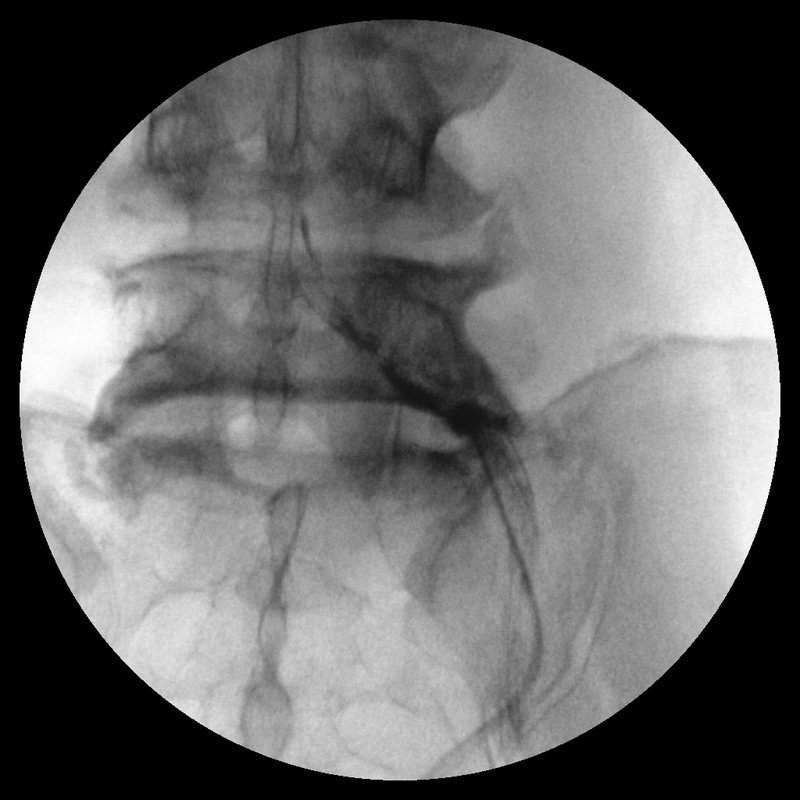
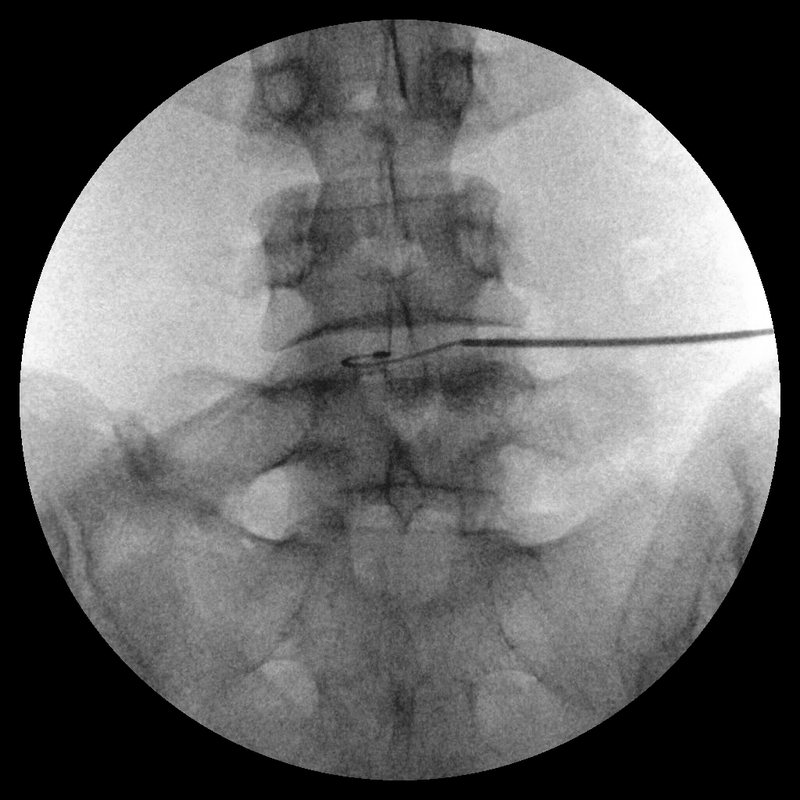
An epidural steroid injection or nerve root block places anti-inflammatory medicine directly next to the irritated nerve root. You lie face down and the needle is guided with live X-ray. Contrast dye confirms the medicine will spread around the right nerve. The procedure takes about 20 to 30 minutes and you go home the same day.
Recovery and results
Your leg may feel numb or heavy for a few hours from the local anaesthetic. Relief from the steroid usually starts within a few days to two weeks. Many people find it easier to sleep and do their exercises as the leg pain settles.
What you can do
- Keep moving gently, such as short walks
- Avoid long periods of sitting
- Follow nerve-gliding exercises from your physiotherapist
Questions
How long does an epidural steroid injection take?
The procedure itself usually takes 15 to 30 minutes and is done as a day procedure. You will be monitored for a short time before going home.
Is the injection painful?
Local anaesthetic is used to numb the skin. Sedation can be offered if you are anxious. Most people describe pressure rather than sharp pain.
Can the injection be repeated?
Yes, if the first injection helped. Doses are spaced out and limited each year to keep steroid exposure safe.