Home / Conditions / Lower back pain
Lower back pain specialist in Singapore
Back pain that has lasted weeks or months, or keeps coming back, despite rest, physiotherapy and simple painkillers.
About lower back pain
Most episodes of lower back pain settle within a few weeks. When pain persists beyond about three months it is called chronic, and it often has more than one source: the facet joints, the discs, the sacroiliac joints, the muscles, or irritated nerves. Working out which structure is responsible guides which treatment is likely to help.
Symptoms
- Aching or stiffness across the lower back, often worse after sitting or standing for long
- Pain that spreads into the buttock or upper thigh
- Pain when bending backwards or twisting (common with facet joint pain)
- Pain on one side over the dimple at the back of the pelvis (common with sacroiliac joint pain)
- Muscle spasm and difficulty getting up from a chair
Common causes
- Facet joint arthritis (wear of the small joints at the back of the spine)
- Disc degeneration or a bulging disc
- Sacroiliac joint pain
- Muscle and ligament strain
- Spinal stenosis (narrowing around the nerves)
- Pain that continues after spine surgery
How it is diagnosed
Scans often show wear and tear that is common even in people without pain, so the diagnosis rests on your history and examination as well as imaging. When the source is unclear, a diagnostic block, where a small amount of local anaesthetic is placed at one structure under X-ray guidance, can show whether that structure is the main pain generator. A clear diagnosis makes treatment more likely to succeed.
How Dr Hope can help
Your first consultation includes a full history and examination and a review of any scans. Treatment options may include:
- Review of medicines to find an effective, safe combination
- Image-guided facet joint injections or medial branch blocks
- Radiofrequency ablation (denervation) of the facet joint nerves
- Sacroiliac joint injection
- Epidural steroid injection where a nerve is involved
- A coordinated plan with your physiotherapist and surgeon where needed
Not every option suits every patient. Dr Hope will explain the expected benefits, risks and costs of each before you decide.
What to expect on the day of a procedure
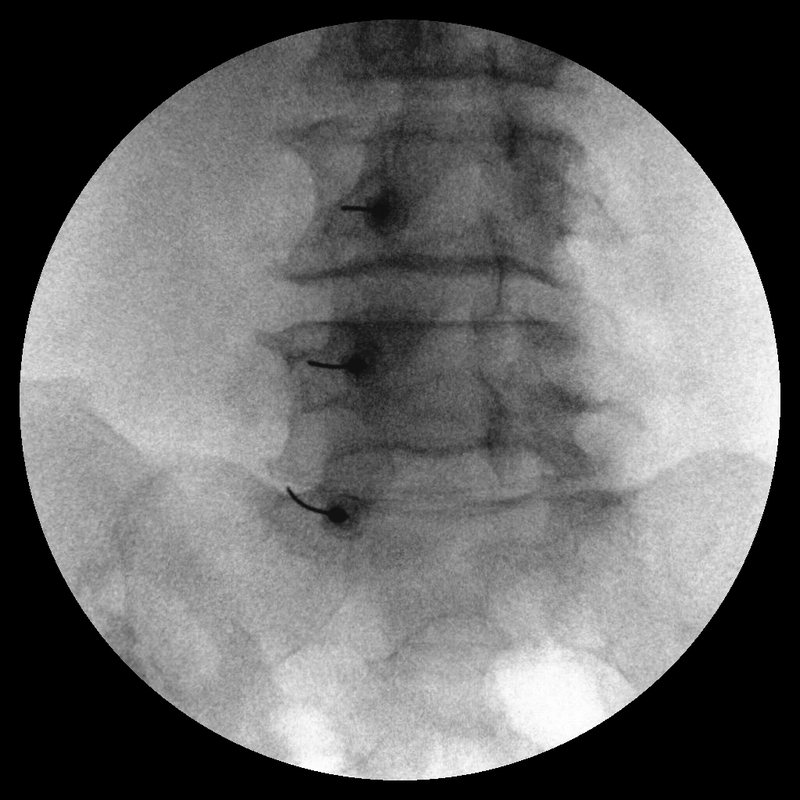
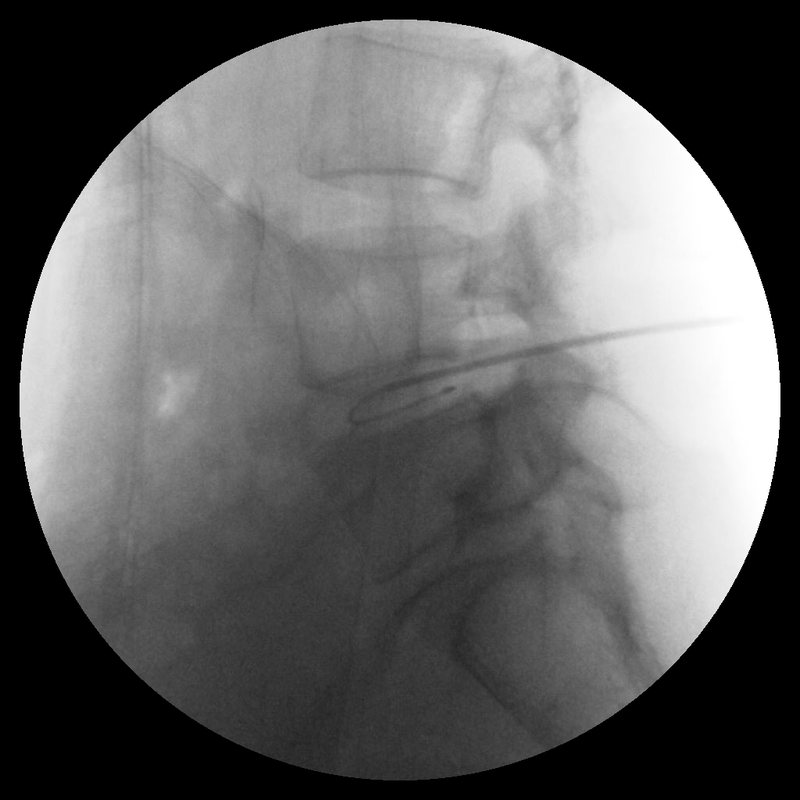
Most back procedures are done as day cases. You lie face down, the skin is numbed, and fine needles are guided into position with live X-ray. Light sedation is available. A medial branch block takes around 20 to 30 minutes. If it gives good short-term relief, radiofrequency ablation of the same nerves can provide longer relief, often lasting many months.
Recovery and results
You can usually walk out of the procedure room and go home the same day. Most people return to desk work within a day or two. Some soreness at the injection sites for a few days is common. The benefit is greatest when you use the window of reduced pain to build strength with your physiotherapist.
What you can do
- Stay active and avoid long periods of bed rest
- Break up long periods of sitting every 30 to 45 minutes
- Build core and hip strength gradually
- Use heat for muscle spasm
- Keep a healthy weight to reduce load on the spine
Questions
Do I need an MRI before seeing a pain specialist?
Not always. Bring any scans you already have. Dr Hope will advise whether imaging is needed after examining you.
Will I need surgery?
Most people with chronic back pain do not need surgery. If your assessment suggests a surgical opinion would help, you will be referred to a spine surgeon.
How long does radiofrequency ablation last?
Relief commonly lasts from six months to more than a year. The nerves can regrow, and the procedure can be repeated if it helped.
Related articles
- Back pain in children and teenagers
- Desk-job neck and back pain: what helps and when to get help
- Discogenic back pain: when the disc itself is the source
- Epidural steroid injections: what they are and are they safe?
- Facet joint pain: a common source of back and neck pain
- Spine fractures from osteoporosis
- Pain after spine surgery: what are the options?
- Back and pelvic pain in pregnancy